
Why buy marble?
Why buy marble?
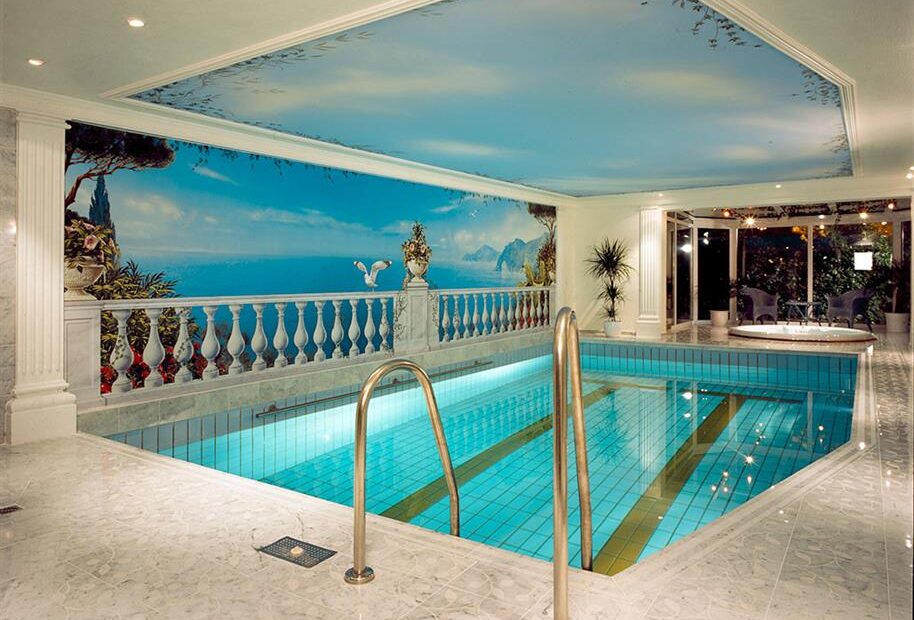
There is no need to sing the praises of marble here, whose use dates back to antiquity. The price of a marble depends on its quality, its origin and its colour. You can find it from 50€ per m², but you can also pay more than 1000€ for the world-famous Statuario Carrara marble, supply only. White, pink or dark, from France, Italy, Belgium or China, every marble has its own use, which you will find here, along with its strengths and weaknesses.
The distinctive features of marble
To talk about marble is, of course, to talk about luxury. It is associated with the grandest residences, the most prestigious floors, royal kitchens and renowned bathrooms, as its use dates back to antiquity.
Marble is a natural rock of calcareous origin, composed of calcite, with veining, which takes on different hues due in particular to the presence of iron oxide. Naturally, pure marble is white. It is usually found in mountainous areas and, in particular, in Italy for one of the most famous marbles.
After polishing, different effects can also be achieved, whether a patina, a high gloss and so on.
The different marbles
Marble is a tile at the top end of the market and, therefore, its price can rise very quickly depending on its quality and properties.
While it is naturally white in origin, all the other minerals in its composition produce very different effects.
But you should also know that its price can vary depending on its thickness, or on its origin and the delivery costs that this automatically entails.
We therefore find a number of marbles, listed below:
- Classic white marble
It generally comes from the Carrara area in Italy.
It is the most widely used marble, mainly for floors, because of its light colour which, thanks to its veining, does not show dirt.
It is also affordable in terms of price.
It is veined with grey and black. When these veins are translucent, they can become fragile.
Its supply price is between 70 and 150 € per m².
- Pink marble
It was the marble sold in the splendid apartments of the early twentieth century.
Less solid than white marble, it also has a shorter lifespan and can tend to yellow over the years due to sunlight.
It comes from Portugal and is veined with white and grey.
Its price is even more affordable, from 90€ to 200€ per m².
- Black marble
It comes in several colour variants, ranging from blue to black, via grey or green, with white veining.
Among these varieties, black marble combines perfectly with white marble to create a kind of chequerboard layout. It is also found around fireplaces. It comes mainly from Belgium or China.
Its price ranges from 80 to 300 € per m², supply only.
- Blue marble
Coming from Bolivia, Africa or Brazil, it looks superb in bathrooms, for example.
It can therefore be found from 300 to 900 € per m².
- Grey marble
Without going to the darker end, such as black marble, this grey marble can lend a very beautiful elegance to a floor, avoiding making your room too dark or, conversely, too light and busy as with white marble.
Coming from Italy, it can have other hues, such as green and black when it comes from Bergamo, or be darker when its origin is French.
For a quality grey marble, expect to pay from 70 to 120 € per m².
- Carrara Marble
It is the marble par excellence that was used in Roman palaces and therefore the noblest.
It has a protected designation of origin and can therefore only come from the quarries of Carrara, in Tuscany.
The most luxurious is white with very little or no veining at all.
Its price ranges from 80 to over 1000 € per m²; the most expensive is the white with little veining, Statuario or Calacatta
Beige marble can also be found, generally used for bathrooms.
Marble crystallisation
Although marble looks perfect, it can also become dull through foot traffic and wear. However, its shine can be preserved for a long time using the crystallisation process.
Crystallisation consists of mechanical brushing with oxalic acid. The process fills the pores of the marble and restores its shine.
Crystallisation, including honing and products, costs around 20-40 € per m².
The advantages of marble
If we were to list the advantages of marble, we could say that:
- marble is a material synonymous with luxury;
- its beauty is universally recognised;
- although it is often imitated, it is never equalled;
- it has a durability that few other materials can boast;
- it is perfectly heat-resistant, which allows it to be used as a worktop;
- its veining makes it look less busy as tiling.
The disadvantages of marble
Of course, marble cannot have only good qualities, and you will need to take its disadvantages into account in order to provide the necessary remedies, such as:
- marble is porous and therefore needs a water-repellent treatment applied annually to prevent water ingress from degrading it;
- since it stains very easily, you will also need to avoid aggressive products and take great care of it;
- you should also avoid installing it in high-risk areas, namely those prone to stains, such as an entrance straight off a muddy outdoor area, or a heavily used kitchen where food and other preparations would frequently be dropped, and so on. To remedy this, crystallisation can also be a good solution, as it deposits a thin film that prevents such penetration while also making it shine. You can take out a maintenance contract with a company that specialises in this task;
- it is also sensitive to all acidic products, which should therefore be avoided;
- it is relatively heavy, which can be a problem on an upper floor;
- while it resists heat, it also conducts it perfectly and can burn you if you place a dish straight from the oven on it, even after removing it;
- it is relatively expensive depending on the quality and origin of the product.
The uses of marble
While its price is high, it will also depend on the use you make of it and the surface area required for that use, as well as on the choice of marble. Here are the main situations in which marble is found:
- Flooring
From 20 x 20 to 120 x 120 cm, marble tiles come in various sizes as well as various shapes: square, rectangular, diamond and so on.
You can therefore lay them on the floors of an entrance, dining room, kitchen or living room, and even when your room is very large.
You will then find them from 45 to 500 € per m², depending on the type of marble chosen.
- The bathroom
There are plenty of places for it here, whether on the floor, on the walls, or to clad the washbasin unit, for example, or even as a bathtub surround.
It must therefore be treated beforehand against its porosity, as already mentioned, since this is one of the dampest rooms in the house.
And you must be very careful with the products used to clean this room, as marble is very sensitive to acidity.
You will find entry-level marble prices for this room from 70 to 150 € per m².
For a more elaborate range, you will need to budget from 150 to 300 € per m².
Finally, for book-matched marble, i.e. perfectly selected so that the veining flows continuously from one piece to the next across the whole installation, the price will range from 600 to over 1.000 € per m².
- The kitchen
In the kitchen, marble can take pride of place on the floor, obviously with the usual precautions already mentioned against porosity and stains.
But it can also be used on a worktop, as explained below, on a sideboard, on your bar or on your dining table.
You should then budget for a price ranging from 80 to 200 € per m² for the floor and a little more for the other elements, given their even more extensive processing.
- The worktop
It obviously brings chic to your kitchen compared with the many laminates offered elsewhere, sometimes with a faux-marble effect.
On the other hand, it will be extremely delicate, and the slightest stain will have to be dealt with very quickly before it penetrates the material itself.
It must therefore be protected, maintained and cared for as much as possible.
Budget for a price of 200 to 700 € per m² for the worktop.
- The staircase
A marble staircase unfolding before your eyes displays all its elegance. It should be as large as possible and not tucked away in a corner of the house but clearly visible, to show it off from the entrance, for example.
However, it is heavy and must rest on solid ground and be particularly well secured.
It also offers excellent durability.
On the other hand, it may seem a little cold and solemn to you.
The price of a marble staircase, in total, will come to between 5.000 and 20.000 €.
- The marble slab
It will be useful in various situations, for example in front of a fireplace. You can also place it in the centre of a parquet floor or in any other configuration.
It is supplied for cutting, in the form of a large square.
Its price is set according to its thickness and quality, from 70 to 800 € per m².
For its use, you should therefore refer to the second table, with prices according to use, or have the product cut to the exact dimensions you need. By contacting a stonemason directly, you will receive all the advice you need.
These cuts can only be made by a professional equipped with tools specifically designed for this work.
- Cutting formats
Marble can be cut into various formats, whether square, diamond, rectangular, round, oval or specific cuts depending on its exact location.
Cut-outs can also be made to the desired size.
The best approach is to consult the craftsman involved, the project manager or the architect behind your project, so that they can provide you with a precise plan of what will be needed.
It is also possible to groove the slab for a draining board, for example.
- The price of cutting
It depends on the difficulty of the cut and the number of cuts needed to supply the material to the desired size.
It also depends on the shape of the cut, as a straight line is always easier to make than an angled line or a curve.
It also depends on any wastage this may cause.
It further depends on the thickness of the slab being cut.
It can also differ from one marble workshop to another, according to its pricing policy, the tools it has and the urgency requested.
The price of cutting starts from 30 € when the cut is straight, simple, quick and in thin marble.
It can cost € 300 for a very complex cut in thicker marble.
Laying marble
The work varies slightly depending on the type of job planned.
- Installing a marble worktop
You need a very clean, very stable and perfectly flat base to ensure easy installation.
It may also involve replacing an existing worktop, in which case this must first be removed and the support cleaned thoroughly.
It is best for the marble slab to be well prepared in advance, both for cutting and for polishing.
Installation is then carried out using silicone to fix it in place.
- Laying a marble floor
A marble floor is laid just like any other tile.
When cutting, for example at the end of a row, marble is very particular and great care must be taken not to break the tiles, especially given their price. An angle grinder with a diamond disc in good condition is essential. For this reason, it is highly advisable to call in a specialist, which may cost you less than the damage you risk causing.
As with the worktop, the subfloor must be very well prepared and perfectly level.
Levelling can be carried out if a clean floor is not initially available.
The marble tiles are then laid with adhesives designed for this material or with mortar, using the traditional method.
- Laying a marble wall
The technique is also similar to laying wall tiles.
Likewise, a clean and very even surface must be provided, and great care taken with the necessary cuts.
Hiring a professional is also advisable.
The adhesive will also be one specifically designed for laying marble.
The cost of laying marble
It is therefore strongly recommended that marble be laid by a professional who knows all its nuances and can master all its particularities, including cutting.
First of all, you will certainly need to arrange for the materials to be delivered, given how heavy marble can be, not to mention the risk of breakage in transit.
The price of laying marble can sometimes start at 35 € per m² for very simple cases, with no cutting and easy laying. But, as a general rule, it is better to work on the basis of around 40 euros per m² for laying directly on concrete slabs and 80 euros per m² for laying on screed.
In even more complex cases, with numerous cuts, this price can reach 70 euros per m².
Marble maintenance
It is worth recalling here a few tips on marble maintenance.
- Marble should be polished at the time of purchase, not varnished, since varnish holds up far less well and allows for lower prices. Otherwise, unfortunately, you will then have to have it polished later, when the varnish starts to blister.
- For its maintenance, therefore, do not use acidic products such as vinegar or similar, which would attack the marble and also remove its polish.
Use a soft cloth with sprays designed specifically for this material.
- A water-repellent product should be applied every year to compensate for the porosity of marble.
- It is important to clean up any stain very quickly, before it penetrates the marble irreversibly and leaves marks.